
Schema changes should not take your app offline. With the right patterns, you can add columns, rename fields, and backfill data while users keep working.
Principles that keep you safe
- Backward compatibility first
- Small, reversible steps
- Observe everything before and after each change
- Practice the rollback
The expand and contract playbook
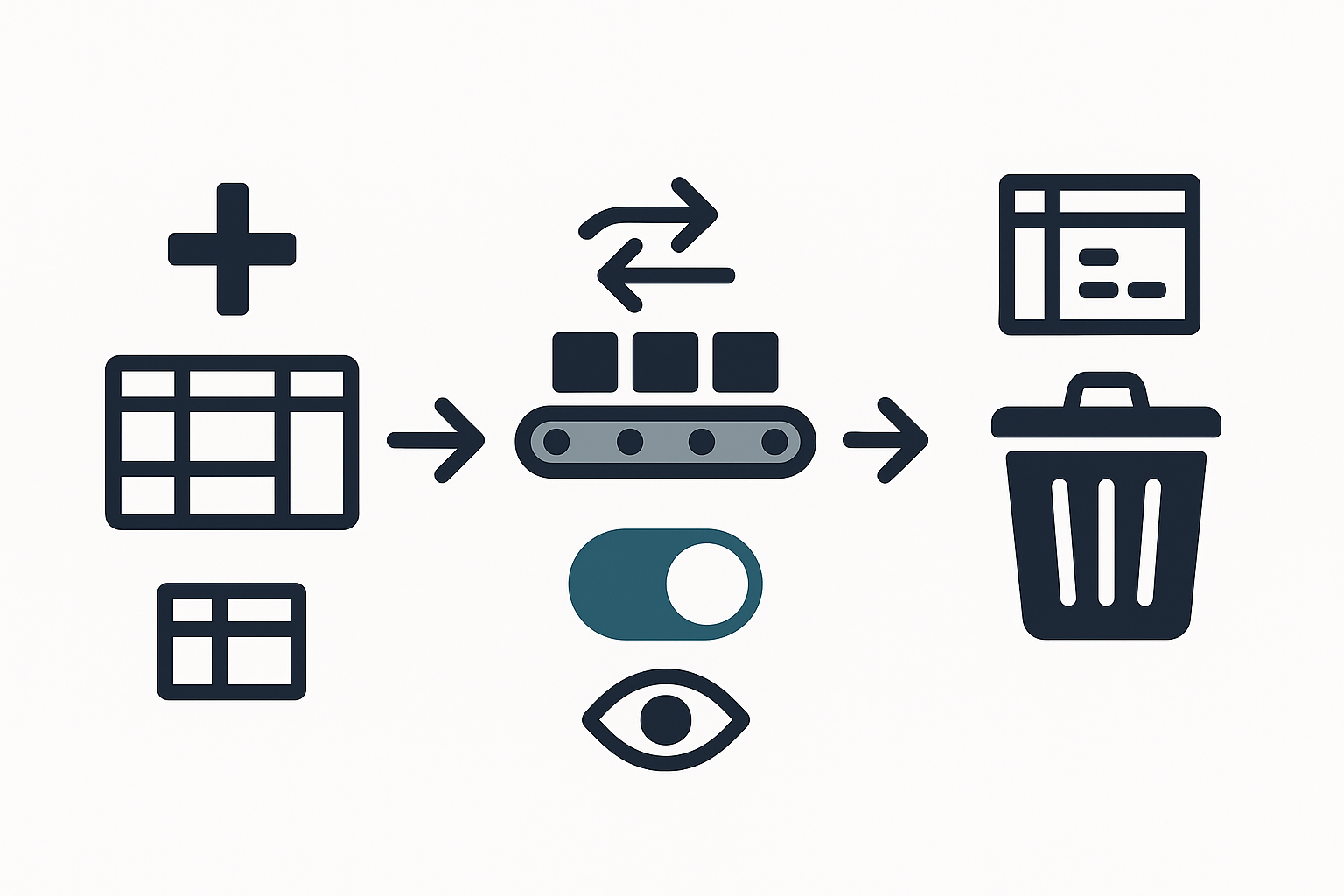
Think of migrations in two phases: expand to support both old and new shapes, then contract to remove the old.
- Expand
- Add new columns or tables without touching existing ones
- Allow nulls or provide safe defaults
- Write code that reads old and new shapes
- Dual write and backfill
- On each write, populate both old and new fields
- Run a controlled backfill job in batches
- Monitor error rate, latency, and replication lag
- Cut reads to the new shape
- Switch read paths to the new columns or tables
- Keep dual writes for a while as a safety net
- Contract
- Remove old columns or tables only after confidence windows pass
- Stop dual writes and delete dead code
Practical examples
Rename a column
- Add
users.new_name - Write both
old_nameandnew_name - Backfill
new_namefromold_namein batches - Flip reads to
new_name - Remove
old_nameafter confidence window
Split a table
- Create
orders_coreandorders_meta - Start dual writes to both
- Backfill historical rows
- Move reads to a join or new DAO layer
- Drop old
orderswhen stable
Backfills without pain
- Process in small batches with id ranges or timestamps
- Use retry with idempotency to avoid duplicates
- Throttle to respect database load and replication
- Record checkpoints so jobs can resume after failure
Guardrails to put in place
- Feature flag the read-path switch
- Alerts on slow queries, lock waits, and replication delay
- Dashboards for backfill progress and error counts
- A runbook that describes the rollback
Avoiding locks and surprises
- Prefer additive changes over destructive ones
- Create indexes concurrently where supported
- Deploy schema first, code second
- Test on a production-like copy with realistic data sizes
Rollback that actually works
- Keep the old read path behind a flag
- Maintain dual writes until after the confidence window
- If new reads misbehave, flip the flag and investigate
- Only remove the safety net once logs and metrics are boring
Conclusion
Zero downtime is a process, not a stunt. Expand safely, backfill in batches, switch reads behind a flag, then contract when the dust settles. If you want a migration plan tailored to your stack and data size, ping us at Code Scientists