
Retrieval augmented generation can turn scattered documents into accurate answers. It only works when the pipeline is clean, the data is trustworthy, and latency stays low. Build for clarity, not complexity.
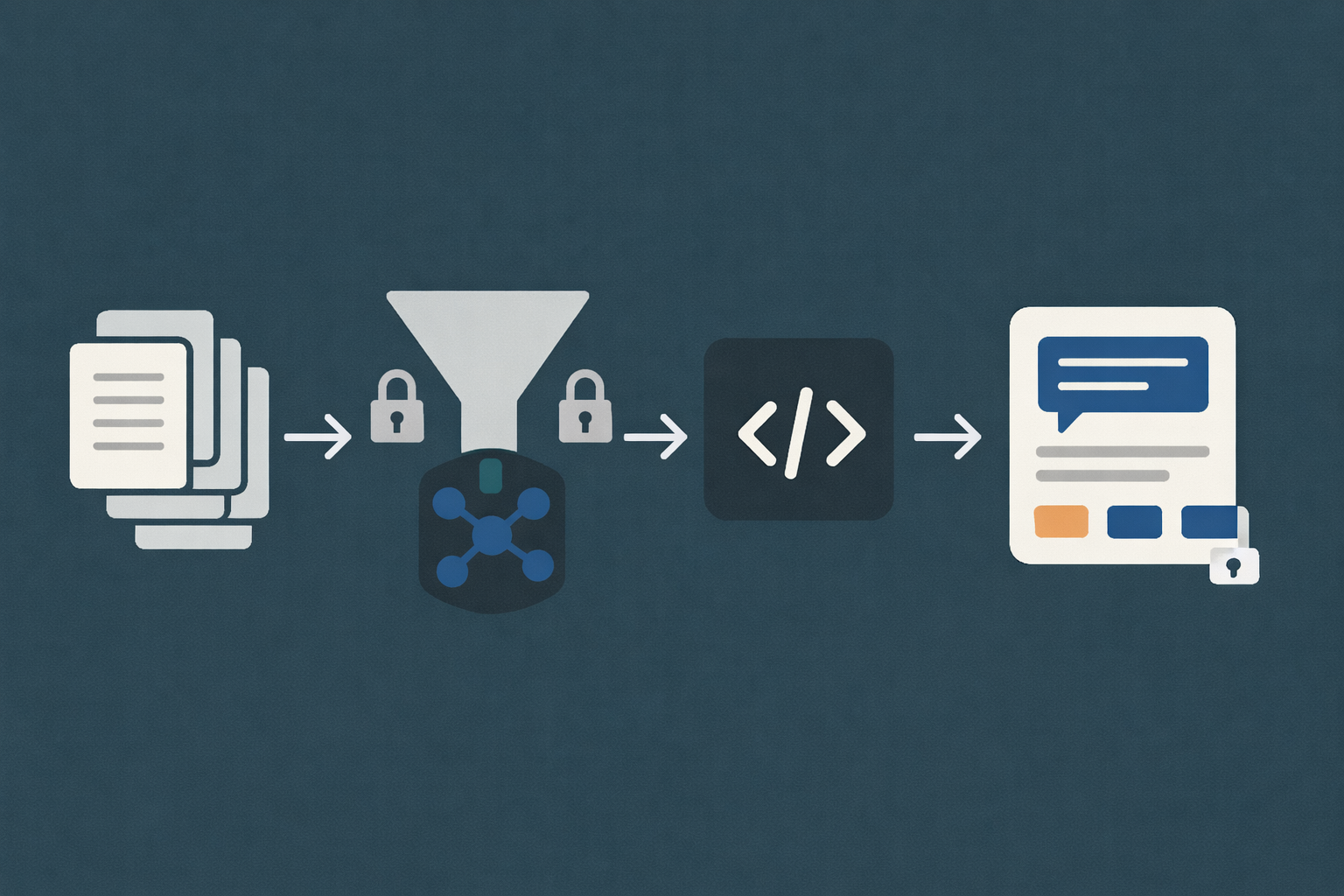
Start with one high value use case
Pick a job where missing context hurts today.
- Support agents need fast, correct answers
- Sales needs product facts during calls
- Ops needs policy guidance without hunting wikis
Define success metrics like deflection rate, time to first answer, and acceptance score.
Prepare content before you index
Garbage in breaks trust.
- Deduplicate and de-noise source files
- Normalize formats and strip boilerplate
- Redact PII and secrets by rule
- Add document metadata like owner, version, and effective date
Chunk with intent
Chunk size is not a guess.
- Split by semantic boundaries such as headings and sections
- Keep chunks small enough to fit context with room for the prompt
- Store titles, anchors, and breadcrumb paths for attribution
Choose embeddings and a store that fit the job
Do not overbuild.
- Select embeddings that work well on your domain language
- Use a vector store with filters for tenant, region, and document status
- Add keyword fallback for exact terms like product codes or SKUs
Retrieval that respects the user
Security is not optional.
- Enforce row level and document level access at query time
- Filter by tenant, role, and region
- Record which documents were retrieved for audit and training
Keep generation constrained
Answers should read like your company, not a guess.
- Use a structured system prompt with writing rules and tone
- Require citations with each answer and verify the links exist
- Validate JSON output when the answer feeds an application
Control latency without losing quality
Fast beats fancy when users are waiting.
- Cache frequent queries keyed by user role and filters
- Hybrid search: run a quick keyword pass before vector retrieval
- Precompute embeddings and warm indexes on a schedule
- Prefer fewer, better chunks over loading the entire knowledge base
Evaluate like a product, not a demo
You cannot improve what you do not measure.
- Golden question sets per team with known good answers
- Track groundedness, citation accuracy, and user acceptance
- Alert on spikes in unanswered or escalated questions
- A weekly review that updates content and tests
Maintain the knowledge base
Treat content as a living asset.
- Assign owners to collections and set review cadences
- Auto expire outdated documents and surface replacements
- Provide one click feedback to flag wrong or stale content
When to go beyond basic RAG
Move up a level only when the need is clear.
- Rerankers when initial retrieval is noisy
- Graph or table extraction for structured lookups
- Domain adapters when your terminology confuses the base model
Conclusion
RAG delivers value when the content is clean, access is enforced, and the system is measured in production terms. Start small, prove accuracy, then scale with confidence. If you want a retrieval plan that works for your team today, ping us at https://www.codescientists.com/?ref=blog.codescientists.com#contact-us.