
Guessing is expensive. Product analytics turns user behavior into clear priorities so your team ships what matters, trims what does not, and learns faster with less drama.
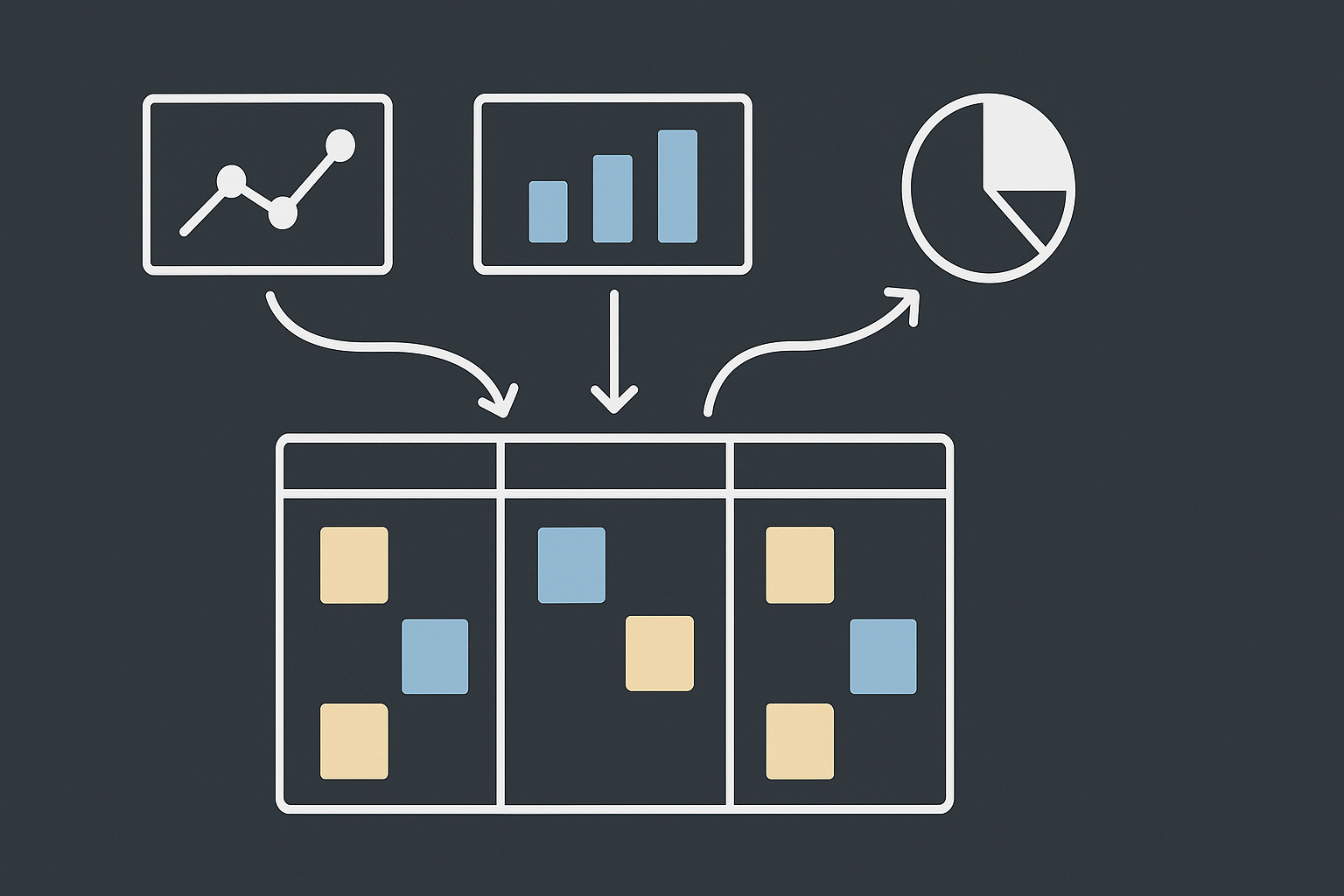
Start with questions, not dashboards
Tie analytics to decisions you actually need to make. Examples:
- Which feature should we build next
- Where are users dropping during onboarding
- Which customer segments retain best after 30 days
Define a minimal metric set
Avoid metric sprawl. Start with a focused stack:
- Acquisition: signups by source
- Activation: first key action completion rate
- Engagement: weekly active users and feature usage depth
- Retention: day 1, day 7, day 30 cohorts
- Revenue: conversion and expansion rates
Instrument the critical paths
Map the core journeys and add events only where they inform decisions. Typical paths:
- Signup and onboarding
- First value moment
- Primary workflows that tie to renewals or revenue
Use cohorts to see cause and effect
Group users by plan, industry, device, or signup week. Then compare retention, feature adoption, and conversion. Cohorts reveal whether changes help the right people or just the average.
Turn events into opportunities
Event data should answer “what” and point to “why.” Pair analytics with:
- Short in-app surveys at key moments
- Session replays on failing steps
- Customer calls with users from target cohorts
Rank work with an evidence ladder
Create a simple scoring sheet for candidate roadmap items:
- Impact potential based on affected cohorts
- Confidence from data and experiments
- Effort in engineering and design
- Time to learn, not just time to build
Pick the top items with the best ratio of impact to effort and fastest learning loops.
Experiment with intent
Run small, low-risk tests before big commitments:
- Copy or layout A/B for onboarding steps
- Limited rollout of a new feature to a single segment
- Price test to a narrow region or audience
Measure predefined success metrics and set a clear stop or scale rule.
Close the loop after shipping
Shipping is the midpoint, not the finish. After each release:
- Compare target metrics to your baseline
- Look at cohort retention changes, not just a spike
- Remove or adjust features that do not move the needle
Share results to align teams
Make a lightweight product health page that updates weekly:
- A tiny set of graphs for acquisition, activation, retention, revenue
- Current experiments with status and decision dates
- The two most important insights from the week
Roadmaps should follow evidence. Ask focused questions, instrument the paths that matter, rank work by impact and confidence, then learn quickly from small bets. If you want a product analytics setup that guides real decisions, ping us at Code Scientists.