
Better models will not fix broken data. Clean inputs beat clever algorithms. Start with the pipelines and tables that drive your reports and your AI.
Define trusted sources
Pick the few datasets that matter most.
- Customers and accounts
- Products and pricing
- Orders and support tickets
Name an owner for each and document what “good” means.
Standardize the basics
Agree on formats before you analyze.
- Timestamps in one timezone
- Consistent IDs and foreign keys
- Clear status values and lifecycles
- Required fields for creation events
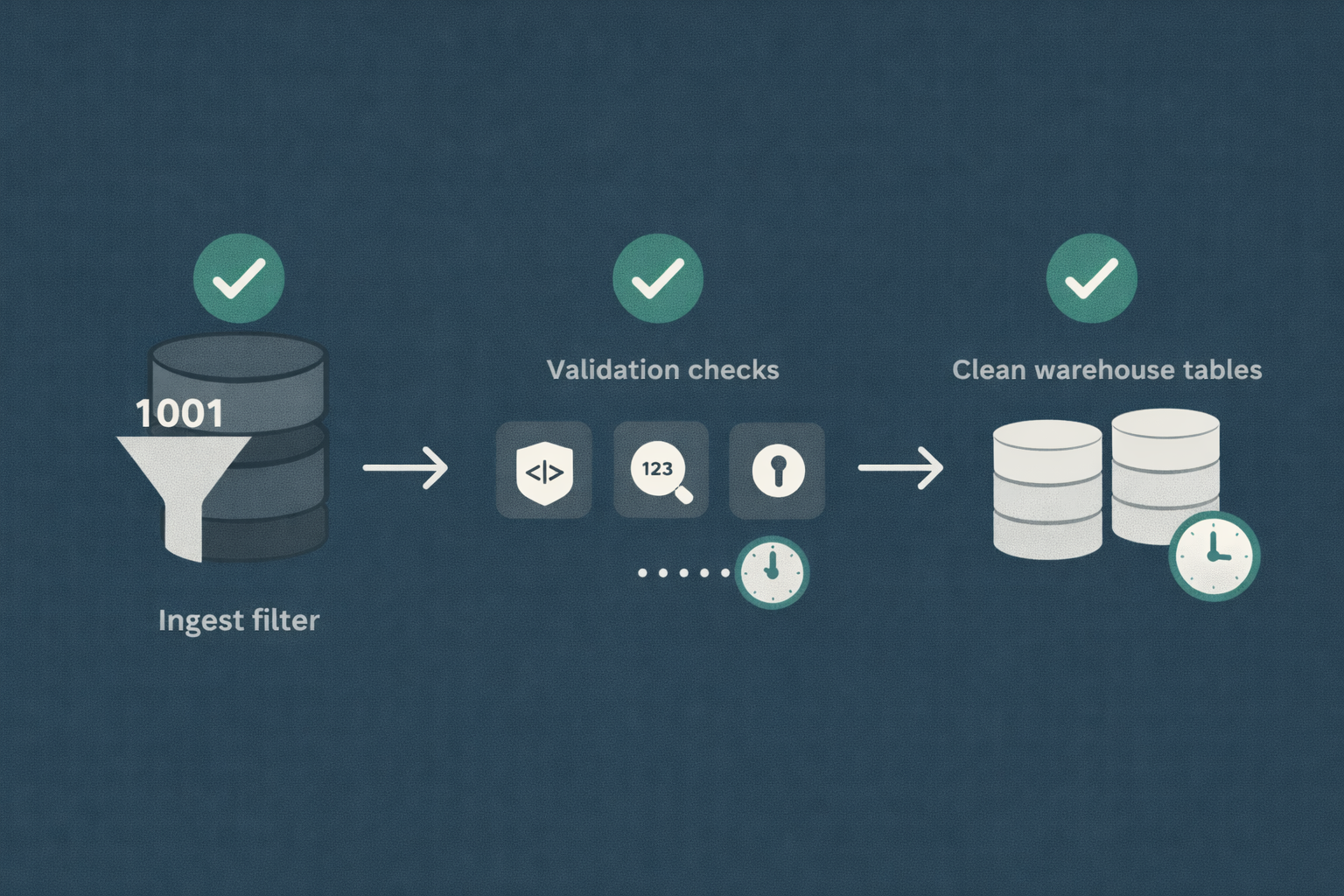
Validate on the way in
Catch problems at the edges.
- Schema checks for type and presence
- Reference checks for valid IDs
- Range checks for numeric fields
Reject or quarantine bad records with a reason code.
Build small, reliable pipelines
Favor clarity over cleverness.
- One job per table or topic
- Idempotent writes so reruns are safe
- Backfills that can resume from checkpoints
Track freshness and completeness
Dashboards should show whether data is usable.
- Last successful load time
- Percent of rows passing validation
- Null rates for key fields
Publish a simple traffic light for each dataset.
Close the loop with producers
Fix problems where they start.
- Share validation failures with upstream teams
- Add inline form checks to prevent bad entries
- Provide examples of correct input
Document the meaning, not just the schema
Help people use the data correctly.
- Field descriptions and business rules
- Known caveats and out of scope cases
- Example queries for common questions
Solid data beats flashy modeling. By defining trusted sources, validating at the edges, and tracking freshness and completeness, you create a foundation that scales. If you want a practical data quality playbook, ping us at Code Scientists.