
Broken dashboards, late reports, and mystery CSVs are not a strategy. Clean pipelines turn raw data into decisions. Here is how to design one that is reliable, scalable, and calm.
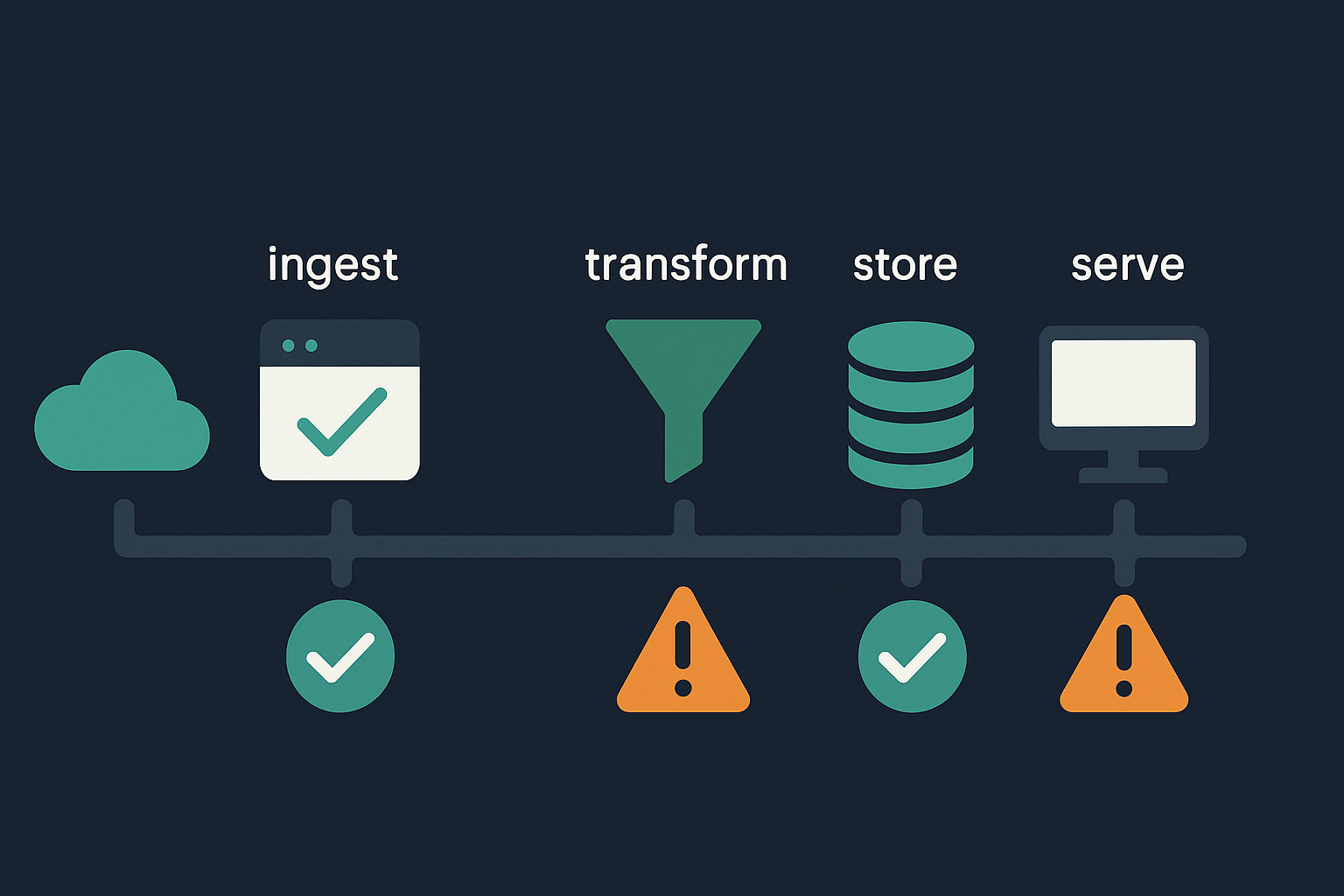
Start with the question, not the tool
Decide what decisions this data should support. List the top three questions you must answer, then work backward to required sources, freshness, and granularity. Tools come after intent.
Design a simple, staged flow
Keep the shape consistent so teams can reason about it. A useful baseline is: Ingest → Validate → Transform → Store → Serve. Give each stage a clear contract and owner.
Ingest without surprises
Pull from a small set of approved sources. Use schema hints and rate limits. Capture metadata like source, timestamp, and version so you can trace issues later.
Validate early and loudly
Bad data gets more expensive as it moves downstream. Add checks for required fields, ranges, and null rates. Quarantine failures. Alert humans only when action is needed.
Transform with discipline
Treat transformations as code. Version them. Review them. Prefer incremental models over full rebuilds. Keep business logic in one place instead of scattering it across dashboards.
Store for both cost and speed
Hot data lives in fast storage for frequent queries. Warm data lives cheaper for historical analysis. Cold archives exist for audits and recovery. Pick the tier before costs pick you.
Serve the right shape to the right tool
Analysts want tidy tables. Applications may want denormalized views. Executives want curated metrics. Publish stable interfaces so consumers are not whiplashed by upstream changes.
Make lineage and observability non negotiable
Track which models feed which dashboards. Log data volumes, freshness, and error rates. A simple status page prevents Slack fire drills and builds trust with stakeholders.
Govern access without blocking progress
Tag sensitive fields. Use role based access and row level filters where needed. Provide safe sandboxes so exploration does not endanger production.
Plan for failure and recovery
Assume outages will happen. Keep idempotent loads, replayable events, and checkpoints. Document how to reprocess a day of data without manual heroics.
When to add orchestration
If jobs need ordering, retries, backfills, and visibility, bring in an orchestrator. Start light. Only add complexity when you can name the failure it prevents.
Common anti patterns to avoid
• One giant script that does everything
• Silent failures and missing alerts
• Transformations embedded in dashboard SQL
• Unlimited direct access to production tables
• Rebuilding the entire warehouse every night
A phased first implementation
Week 1: Map questions, sources, and initial contracts.
Week 2: Build ingest and validation with alerts.
Week 3: Ship two or three core models and publish a metrics page.
Week 4: Add lineage, backfill paths, and a simple status dashboard.
Calm pipelines come from clear contracts, early validation, and visible health. Keep the flow simple, automate where it pays off, and document how to recover. If you want a pipeline that runs quietly while your team builds, ping us at Code Scientists.