
The fastest way to get value from AI is not a moonshot project. It is placing focused AI helpers directly inside the tools your team already uses. Small, repeatable wins add up to real impact.
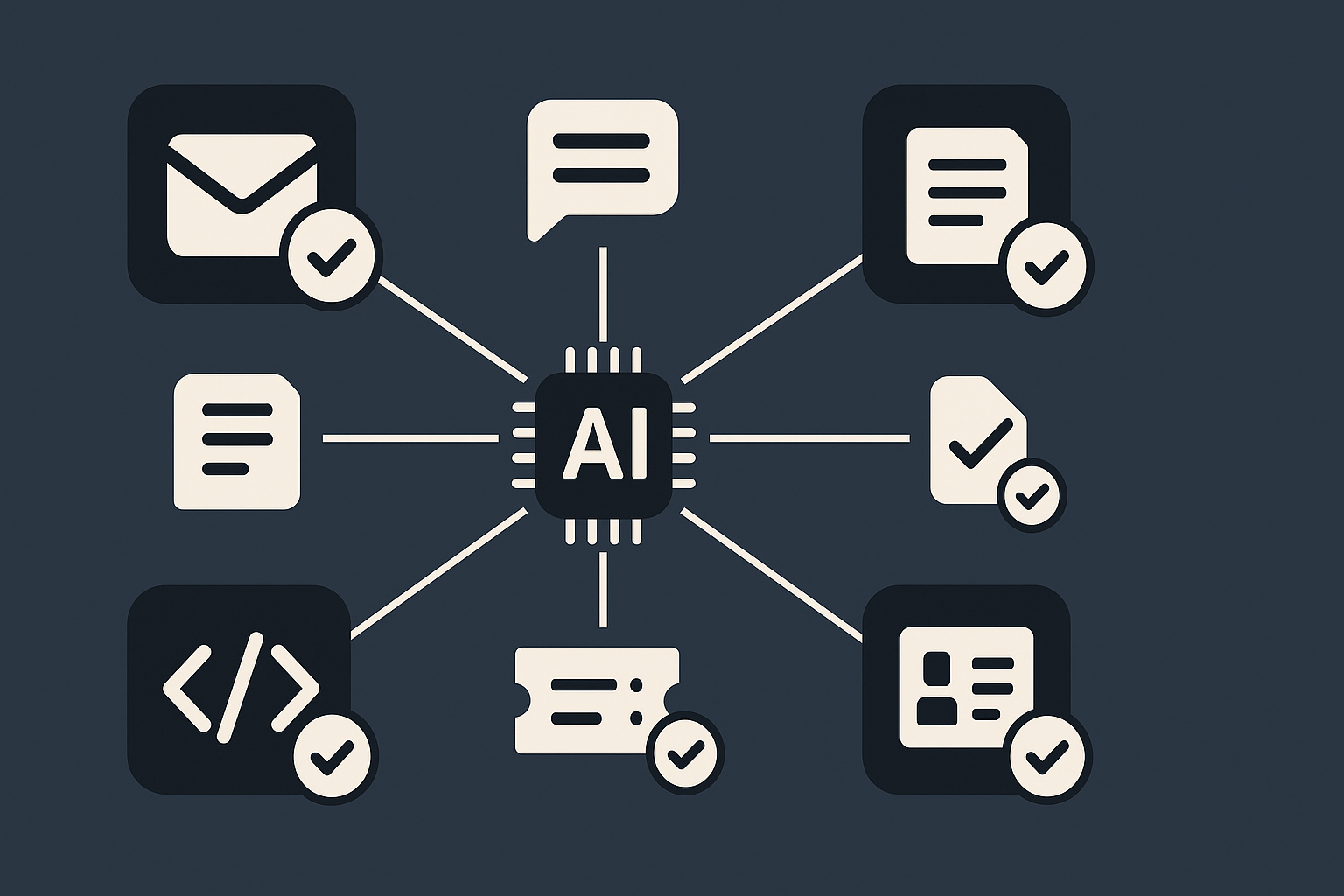
Start where work already happens
Pick one high volume workflow in an existing tool.
- CRM: draft follow ups from call notes
- Help desk: summarize tickets and suggest replies
- Docs: turn meeting notes into action items
- IDE: generate tests from function signatures
Define a tight job to be done
Narrow scope beats vague magic. Write one sentence for the assistant.
- Input it will receive
- Output format it must return
- Acceptance criteria for “good enough”
Keep it simple so quality is measurable.
Protect data as a first step
Wire privacy before prompts.
- Redact PII and secrets in inputs
- Use least privilege service accounts
- Retain logs only as long as needed
- Separate production knowledge from experiments
Choose the right integration path
Meet the team where they work.
- Native app plugins for Gmail, Docs, Slack, Jira
- Webhooks and functions for workflow tools like Zapier and Make
- Lightweight internal services with a simple POST in and JSON out
Constrain outputs for reliability
Deterministic formats reduce surprises.
- Ask for JSON with a fixed schema
- Validate before acting
- Reject and retry on schema errors
- Keep humans in the loop for risky actions
Add retrieval only if it improves accuracy
Do not overbuild.
- Start with a small curated knowledge set
- Version your documents and embeddings
- Log which sources influenced the answer
- Measure retrieval accuracy, not just model scores
Ship with evaluation and flags
Treat it like any other feature.
- Golden test cases for the core task
- Pass or fail gates in CI
- Feature flags for gradual rollout
- Shadow mode in the background before enabling
Measure value, not vibes
Track the metric that proves it helps.
- Minutes saved per task
- Tickets resolved per agent per day
- Draft quality acceptance rate
- Defect reduction from AI code reviews
Control cost from day one
AI should save money, not surprise you.
- Cache repeat prompts and responses
- Route simple tasks to cheaper models
- Batch low urgency work
- Set alerts for cost per action thresholds
Playbook for a first deployment
Week 1: pick a workflow and define the job to be done.
Week 2: build the plugin or webhook with redaction and schema validation.
Week 3: add golden tests, flags, and a small pilot.
Week 4: measure impact, tune prompts, and expand to the next team.
Conclusion
AI belongs inside the tools your team already uses, doing one clear job well. Protect data, constrain outputs, measure real impact, and expand with confidence. If you want a practical plan to put AI into your workflows, ping us at Code Scientists.